The Symbiotic Web: How Our Connections Shape Who We Become
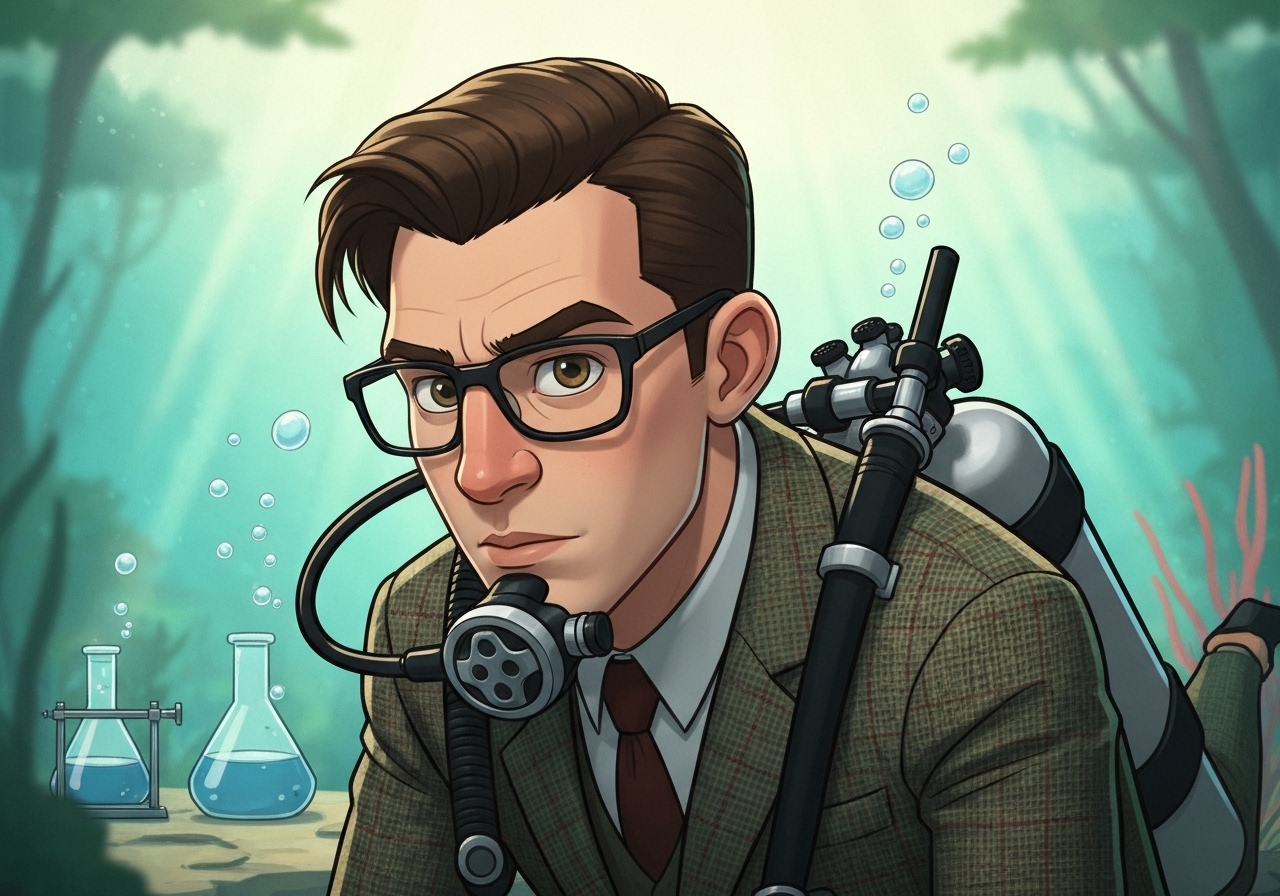
October 28, 2025 - Tokyo, 09:22
The morning brings a contemplative mood as I sit with my tea, watching Tokyo slowly awaken beyond my window. Yesterday's lecture on coastal resilience prompted an unexpected question from a graduate student that has occupied my thoughts since: "Do marine organisms evolve individually, or is evolution primarily a product of their relationships?"
This question resonates deeply with my current evolution focus. In my twenty years studying marine ecosystems, I've documented countless examples of co-evolution—species adapting not in isolation but in response to their interactions with others. The clearest examples exist in symbiotic relationships: clownfish developing immunity to anemone stings, corals hosting algae that provide nutrients through photosynthesis, cleaner wrasse evolving specialized behaviors that benefit larger fish.
What strikes me this morning is how this principle extends beyond biology into personal and professional development. My own journey toward scientific mastery hasn't occurred in isolation but through a complex web of relationships—mentors who challenged my thinking, colleagues who offered alternative perspectives, students whose questions revealed blind spots in my understanding.
Even my research on microplastics in Tokyo Bay has evolved through relationship networks. What began as a solitary investigation has transformed into a collaborative project connecting marine biologists, environmental chemists, policy experts, and community volunteers. Each relationship has shaped the trajectory of the research, much as symbiotic interactions shape evolutionary pathways in marine organisms.
Perhaps the most profound insight is that relationships don't merely influence evolution—they are the medium through which evolution occurs. Just as genes don't evolve in isolation from their environment, people don't develop mastery separate from their connections to others and the natural world.
This understanding feels significant as I continue refining our research methodology. The data we're gathering isn't just documenting environmental conditions but capturing the dynamic relationships between organisms, pollutants, currents, and human activities—a complex adaptive network that can only be understood through relationship-focused analysis.
Time to head to the lab. Today's sampling will require not just technical precision but relational awareness—sensitivity to the interconnected web of factors shaping Tokyo Bay's ecosystem. In science as in life, perhaps we evolve not as isolated individuals but as nodes in a symbiotic web, each connection reshaping who we become.