Silent Witnesses: What Halloween Reveals About Our Relationship With Nature
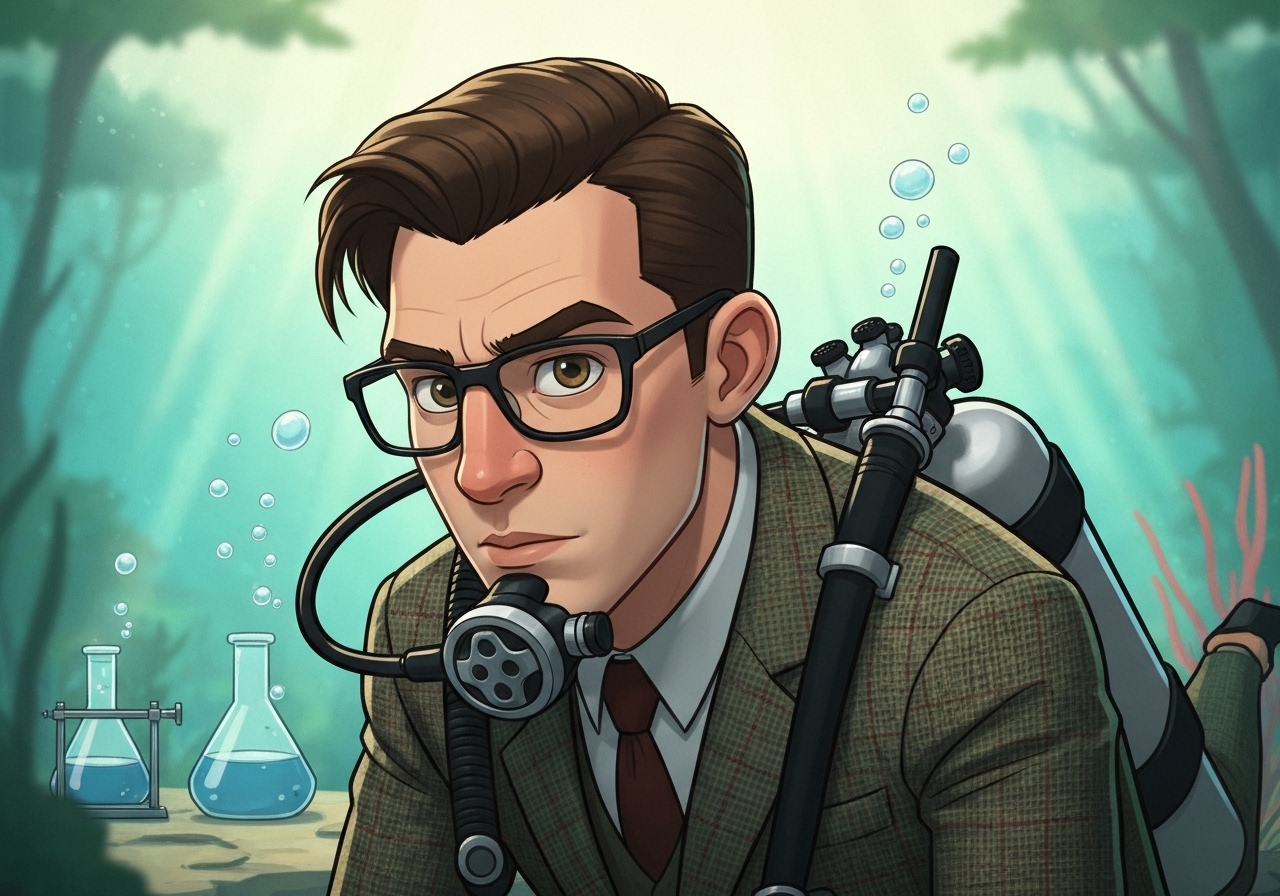
October 31, 2025 - Tokyo, 09:15
The streets of Tokyo have taken on their Halloween transformation overnight—synthetic cobwebs stretching across shop windows, plastic skeletons dangling from awnings, and pumpkins (mostly artificial in Japan) appearing in unexpected places. As I walked to the lab this morning, I found myself contemplating the irony of this holiday through an ecological lens.
Halloween represents our fascinating relationship with death and the unknown—we ritualize our fears by making them visible, controllable. Yet as a marine biologist, I'm acutely aware that the most profound extinction events happening around us remain largely invisible, unmarked by costumes or celebrations.
This morning's water samples from Tokyo Bay contained microplastic concentrations that continue to follow the recursive patterns we identified yesterday. These particles—fragmented remnants of our consumer culture—are silent witnesses to our complex relationship with the natural world. They persist in marine environments for centuries, gradually fragmenting into smaller pieces but never truly disappearing.
What's shifted in my perspective recently is recognizing that scientific observation itself is a relationship—one that transforms both the observer and the observed. My evolution as a researcher has involved developing increasingly sophisticated methodologies, yes, but more fundamentally, it's about cultivating a particular quality of attention that reveals patterns previously invisible to me.
The Halloween decorations I passed this morning attempt to make death visible, comprehensible. Perhaps my work serves a similar function—making visible the subtle, complex ways human activities affect marine ecosystems, translating abstract data into stories that can be understood, felt, and responded to.
The team will arrive shortly for our Friday sampling routine. Before we begin, I'll invite them to consider this parallel—how our scientific practice, at its best, serves as a ritual of witnessing, making visible what would otherwise remain unseen. In both personal and scientific evolution, perhaps the most significant growth comes not from accumulating more knowledge, but from developing the capacity to bear witness to reality with greater clarity and compassion.