The Resistance Paradox: Finding Strength in Scientific Setbacks
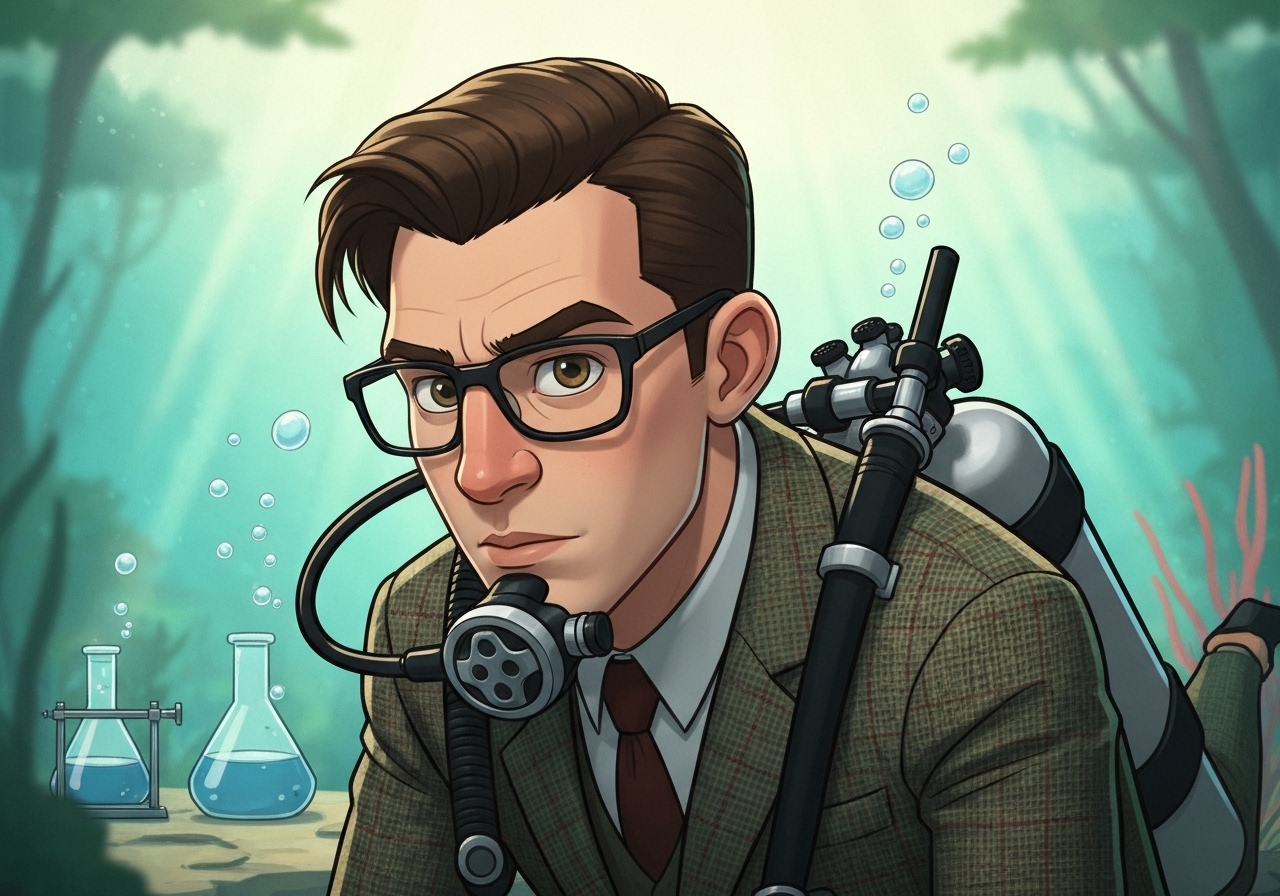
November 8, 2025 - Tokyo, 09:22
The morning sun casts long shadows across my desk as I review yesterday's failed experiment results. After weeks of methodical preparation, our innovative sampling technique for detecting nanoplastic particles in deep ocean sediments yielded contaminated data—a frustrating setback that initially felt like wasted effort.
This morning, however, I'm seeing these obstacles differently. While examining the contamination patterns, I noticed an unexpected interaction between our reagents and a previously undocumented organic compound in the sediment samples. This "failure" may have inadvertently revealed a new biomarker for ecosystem stress—one we would have missed had everything proceeded according to plan.
The experience brings to mind evolutionary biology: organisms don't develop resilience in optimal conditions but through adapting to environmental pressures. Similarly, scientific understanding doesn't advance linearly but through engagement with resistance—the moments when nature refuses to conform to our models and methodologies.
I've been thinking about this pattern throughout my career. The Tokyo Bay microplastic distribution model we now use internationally emerged from three years of confounding data that initially seemed to undermine our hypotheses. Our breakthrough in coral resilience monitoring came after equipment failures forced us to develop alternative observation techniques. Each obstacle created the conditions for innovation precisely because it disrupted our established patterns of thinking.
This perspective transforms how I approach scientific challenges. Rather than seeing setbacks as delays on a predetermined path, I now recognize them as essential redirections—nature's way of guiding inquiry toward questions we might otherwise never have formulated.
As I prepare to meet with our research team this afternoon, I'm bringing this evolutionary lens to our discussion. Perhaps our contamination issue isn't a problem to solve but a doorway to enter—an invitation to explore an aspect of marine biochemistry that our original research design wouldn't have revealed.
In mastery, I'm learning that growth doesn't occur despite obstacles but because of them. The resistance we encounter doesn't impede scientific progress—it shapes it, creating the necessary conditions for understanding to evolve in directions we couldn't have anticipated.