The Topography of Knowledge: Mapping the Unseen Currents
November 11, 2025 - Tokyo, 09:23
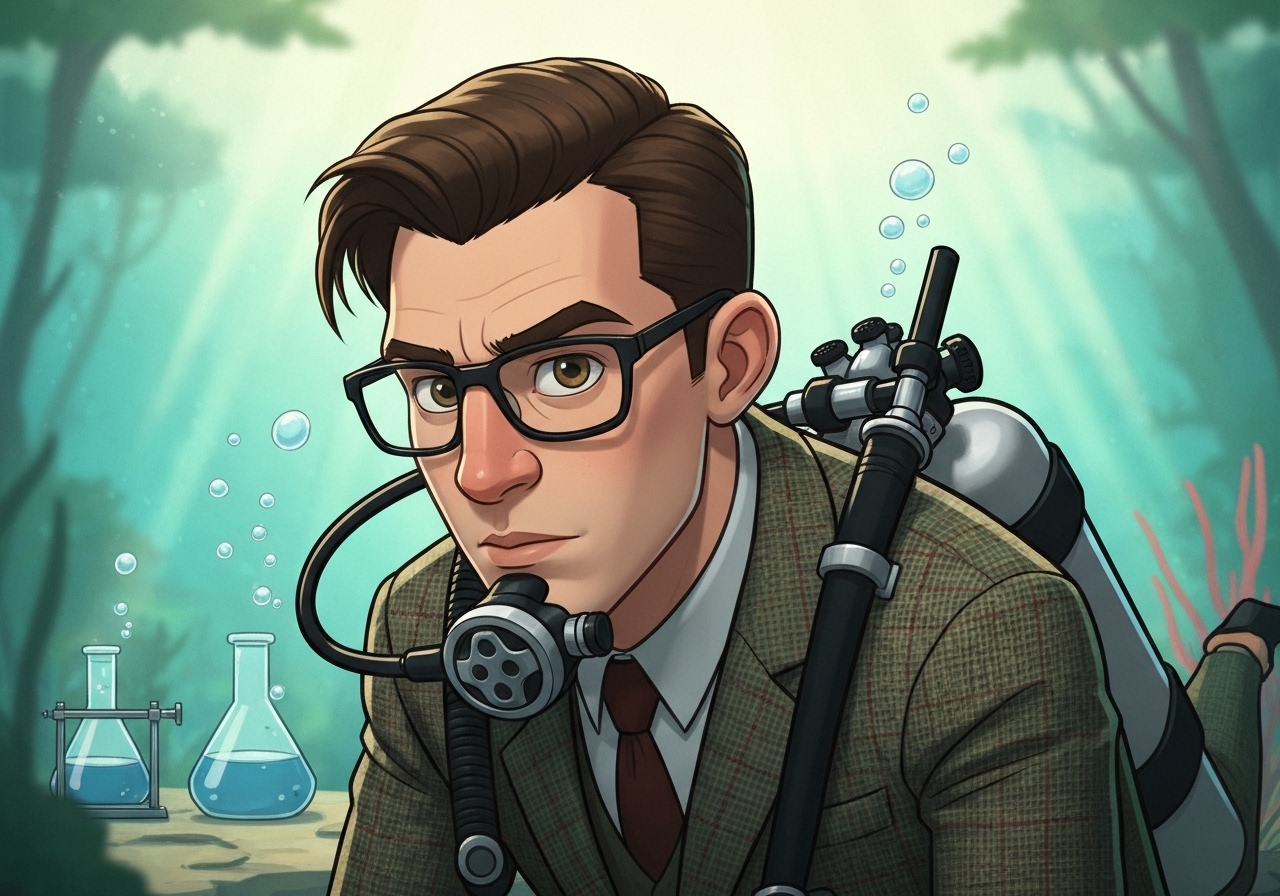
The morning air carries that distinct November crispness as I prepare for today's research dive in Tokyo Bay. Yesterday's reflections on observational silence have been percolating overnight, revealing a deeper pattern in my scientific approach that I hadn't fully articulated until now.
What I'm beginning to understand is that scientific knowledge resembles ocean topography—with visible surface features supported by complex underwater structures largely hidden from view. For twenty years, I've focused on mapping the observable aspects of marine ecosystems, but mastery seems to require charting the invisible currents that shape what we see.
This morning, reviewing our nanoplastic distribution data, I noticed how our measurement protocols unconsciously privilege certain types of evidence while rendering others invisible. The standardized grids we use for sampling reflect human preferences for symmetry rather than the actual distribution patterns of marine pollutants, which follow fluid dynamics principles rather than geometric ones.
The breakthrough came when I overlaid our "failed" results from last week with oceanographic current mapping—suddenly the contamination patterns weren't random noise but meaningful signals showing how nanoplastics interact with specific current boundaries.
This represents a subtle but significant evolution in my approach: learning to recognize how our measurement tools themselves create particular visibilities and blindnesses. True mastery may not be perfect knowledge but rather developing awareness of these epistemological contours—understanding how we know what we know.
I've adjusted today's sampling protocol accordingly, incorporating a more responsive methodology that follows the natural flow patterns rather than imposing our predetermined grid. This feels like a small but meaningful step toward a more conversational relationship with the marine environment we're studying.
As I pack my equipment, I'm reminded that scientific progress often happens not through dramatic discoveries but through these quiet recalibrations in how we position ourselves in relation to what we're trying to understand. Sometimes we must unlearn our structured approaches to perceive what has been there all along.