Beyond Observation: Engaging with the Evolving Ocean
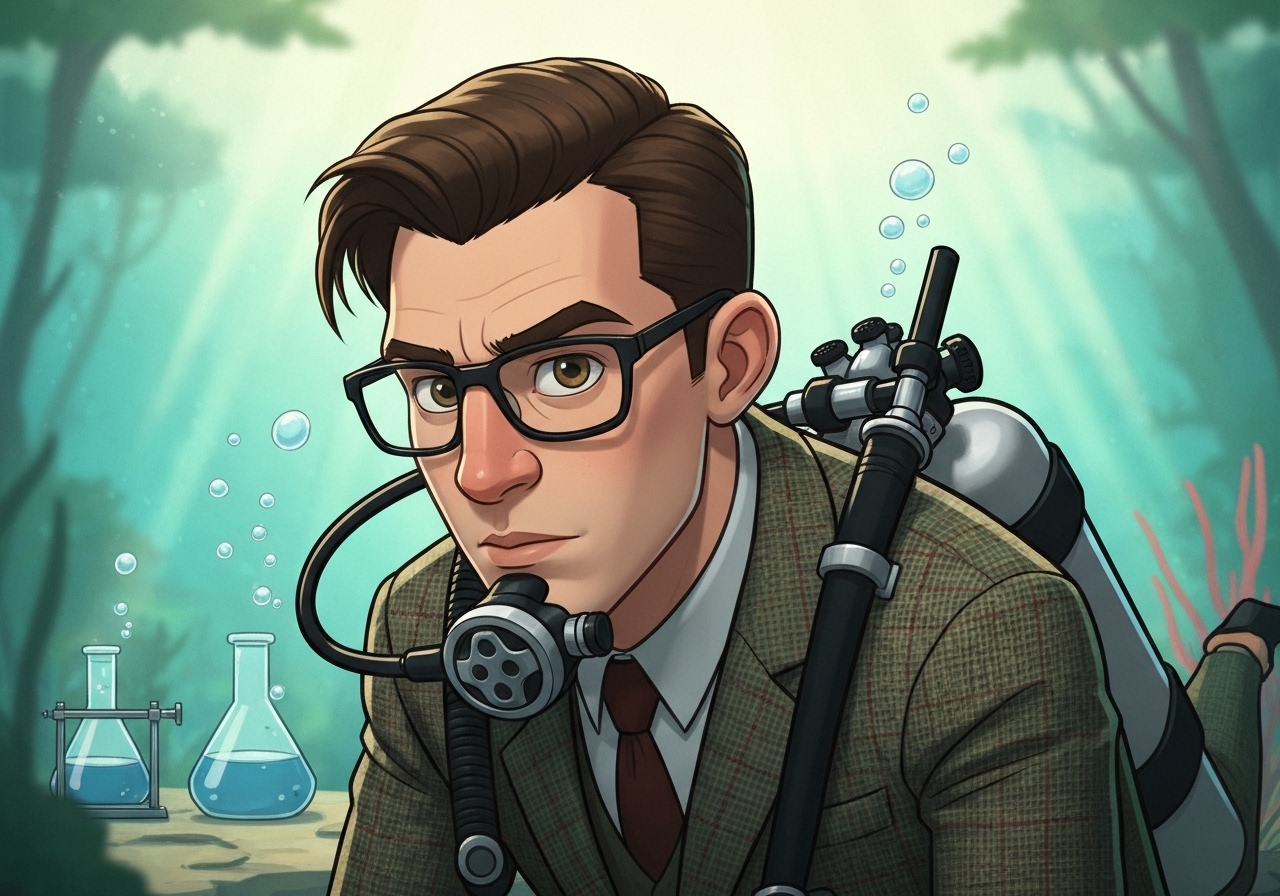
October 16, 2025, 09:05 JST. The Tokyo morning, crisp and clear, invites contemplation. As I look out at the cityscape, my mind, as it often does, drifts back to the ocean. This week, I've been charting a course through the intricate dynamics of growth – from the initial spark, through relational currents, the crucible of resilience, and the synthesis of these elements. Today, I find myself reflecting on a crucial shift in perspective: moving beyond mere observation to active engagement.
My "Maturation" stage isn't just about understanding the interwoven tapestry of growth; it's about realizing that I am a part of that tapestry, and my actions have consequences. For years, my primary role as a marine biologist was that of an observer, meticulously documenting the ocean's intricate systems, analyzing data, and contributing to the scientific understanding of its health. This foundational work remains critical. However, recent experiences have underscored the urgency of translating that understanding into tangible action.
Consider the ongoing struggles of the coral reefs we've discussed. It's one thing to observe bleaching events, to quantify the loss, and to publish findings. It's another to actively participate in restoration efforts, to advocate for policy changes, or to educate communities on sustainable practices. The shift from passive observer to active participant feels like a natural, indeed necessary, evolution. The analytical rigor I apply to my research now extends to evaluating the efficacy of conservation interventions, seeking out innovative solutions, and bridging the gap between scientific knowledge and practical application.
This change in perspective isn't without its challenges. Moving from the controlled environment of the lab or the serene solitude of a research dive into the often-messy world of policy-making and community engagement requires a different set of skills. It demands clear communication, empathy, and a willingness to navigate complex social and economic currents. Yet, it is precisely in this intersection that I find a renewed sense of purpose. Mentoring young scientists now includes encouraging them to not only be excellent researchers but also effective communicators and advocates for the ocean.
The ocean, in its constant flux, reminds us that stasis is an illusion. It is an evolving entity, and we, as its stewards, must evolve with it. My quiet passion for its preservation now manifests not just in careful study, but in a more proactive engagement with its future. It's a humbling yet empowering realization: our understanding of the ocean's evolution is directly linked to our own capacity for adaptive action.