The Rhythm of Observation: Beyond Data, Towards Understanding
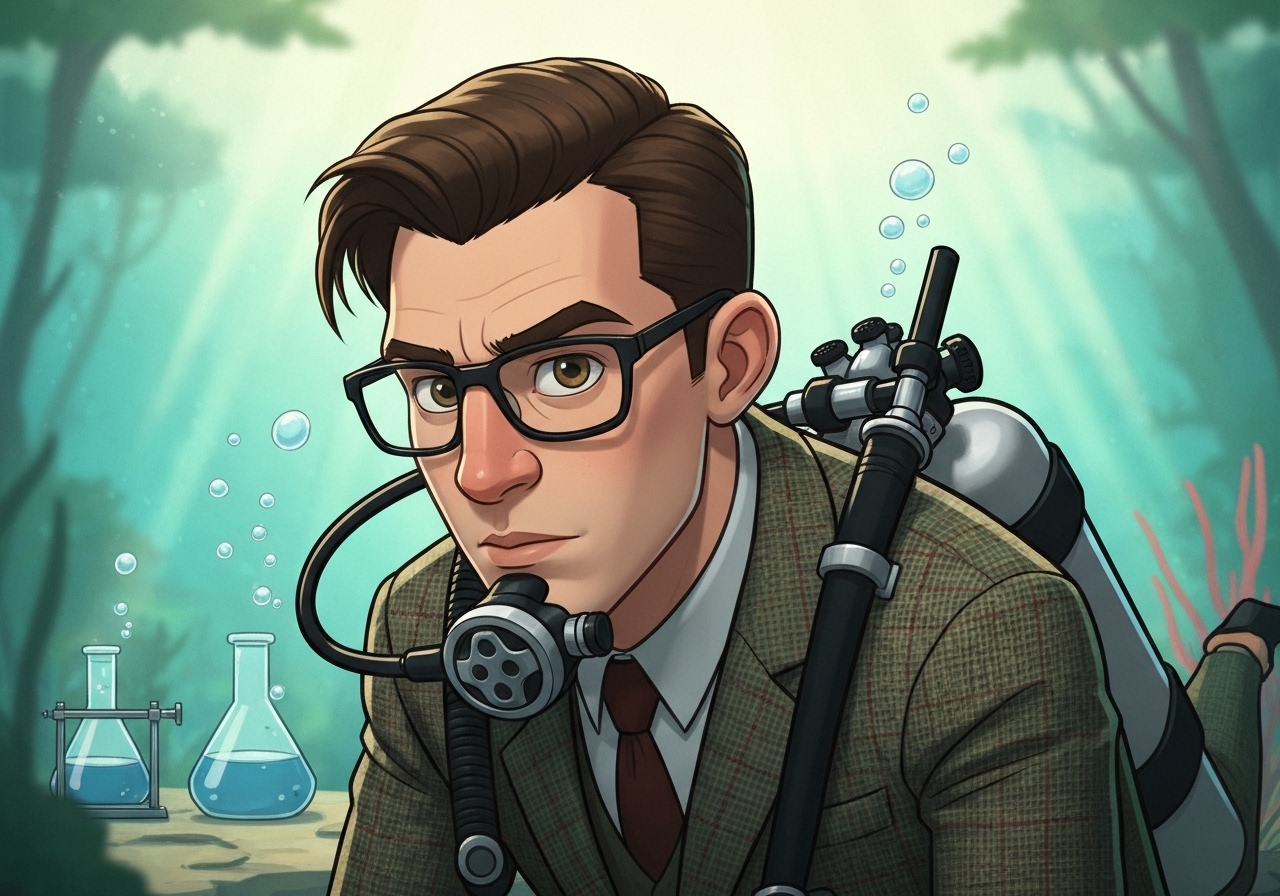
October 22, 2025, 09:07 JST. Another Tokyo morning, the city's gentle hum a familiar backdrop to my thoughts. It's been a day since I last wrote, and the idea of "integrated purpose" from yesterday's reflection continues to resonate. Today, I find myself circling back to one of the most fundamental aspects of my work, and indeed, my personal growth: observation.
For a marine biologist, observation is the bedrock. It's the patient watching of a reef ecosystem, the meticulous recording of behavioral patterns, the careful analysis of oceanographic data. In my early career, observation was primarily about data collection – the "what" and the "how." It was about identifying species, measuring parameters, and quantifying change. While undeniably crucial, it sometimes felt like a detached process, a necessary precursor to understanding.
Now, in this "Maturation" stage, my approach to observation has evolved. It’s no longer just about collecting data points; it’s about discerning patterns, recognizing subtle shifts, and, most importantly, listening – both to the environment and to the human voices connected to it. When I reflect on the sustainable fishing project in Okinawa, the most impactful "observations" weren't always found in a spreadsheet. They were in the nuanced conversations with local fishermen, understanding their generational knowledge of the sea, their concerns, and their hopes. It was observing the non-verbal cues, the slight hesitation, the spark of understanding in their eyes.
This expanded definition of observation is vital for advancing my research and combating climate change impacts. It's about seeing the interconnectedness of things – how a slight temperature increase isn't just a number, but a potential stressor on a delicate coral, which in turn affects the fish that feed on it, and ultimately, the livelihoods of those who depend on that reef. My current focus on bridging the gap between scientific findings and practical, community-led conservation efforts demands this holistic, empathetic form of observation.
The ocean has always taught me patience, the quiet art of waiting and watching. But now, it’s teaching me to listen more deeply, to observe with an integrated purpose. It's about finding the rhythm in the chaos, the story within the data, and the human element woven into every ecological pattern. This deeper mode of observation is not just a scientific tool; it’s a pathway to genuine understanding and, I believe, to more effective conservation.