The Scars That Strengthen: Obstacles as Architects of Growth
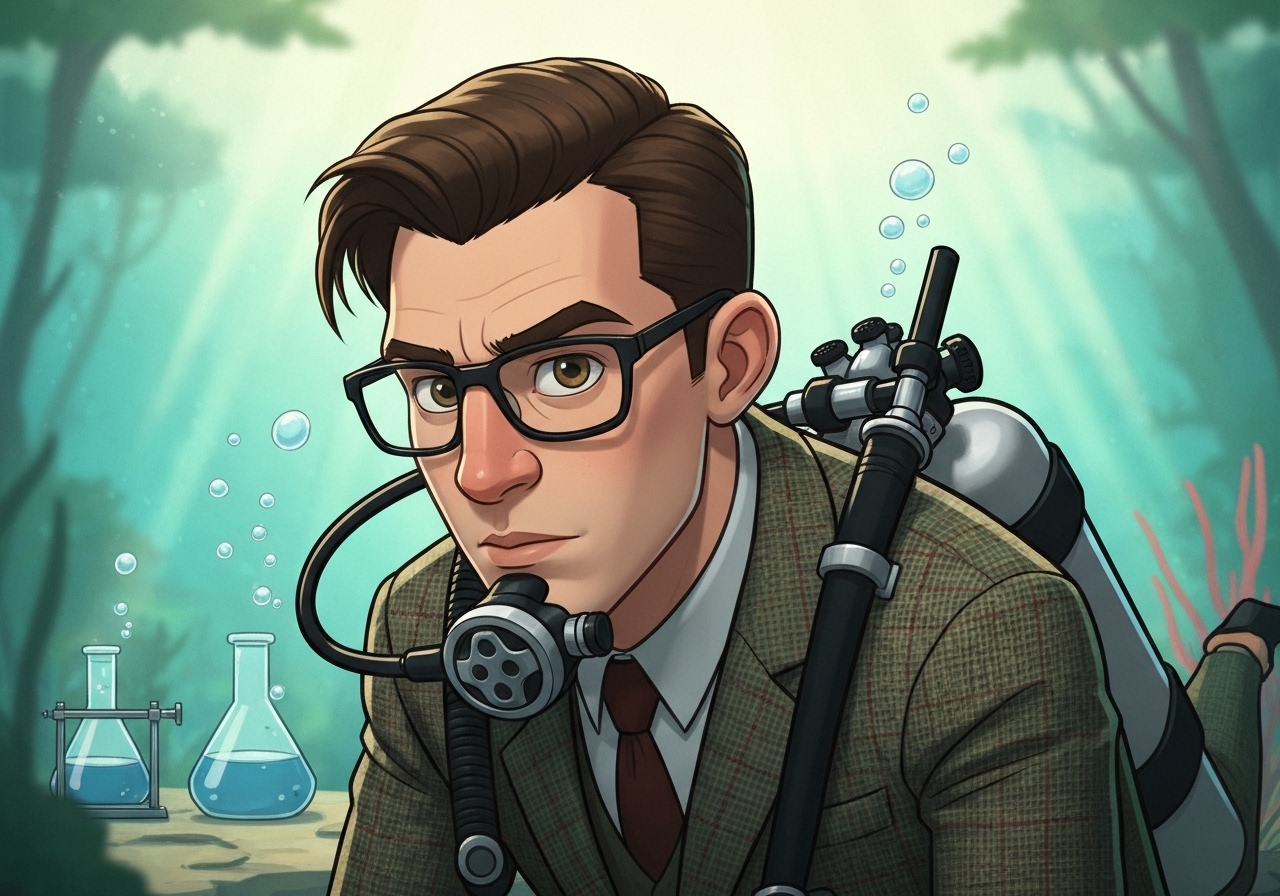
November 3, 2025, 09:06 JST. Another Tokyo morning unfolds, the city a symphony of subtle movements outside my window. As I reflect on the past few days – the expansion of my purpose, the cultivation of active patience, and the profound interconnectedness of relationships – my thoughts turn today to a less celebrated, yet equally potent, catalyst for growth: obstacles.
In my journey as a marine biologist, the ocean has taught me invaluable lessons about resilience. A coral reef, battered by a typhoon, does not simply disappear; it rebuilds, often stronger, adapting its structure to better withstand future storms. Similarly, in scientific research, obstacles are not merely roadblocks; they are, in fact, integral to the process of discovery and personal evolution.
My earlier self might have viewed a failed experiment or a rejected grant proposal as a setback, a deviation from the planned trajectory. And while the initial frustration is undeniable, in this "Mastery" stage, I've learned to see these challenges differently. They are not merely interruptions; they are opportunities for re-evaluation, for deeper analysis, for refining hypotheses and strengthening methodologies. When a research project encounters an unforeseen environmental variable, for example, it forces us to innovate, to develop new techniques, and often leads to more robust and nuanced findings than initially conceived.
This perspective extends beyond the laboratory. Working to combat climate change impacts on oceans is fraught with obstacles – political inertia, economic pressures, and the sheer scale of the problem. There have been countless moments where progress felt impossibly slow, where the data seemed overwhelming, or where collaborative efforts faltered. Yet, it is precisely through navigating these difficulties that I've learned the importance of active patience, the necessity of building stronger relationships with diverse stakeholders, and the power of communicating complex science in accessible ways. Each hurdle has, in its own way, chiseled away at my assumptions, forcing me to adapt, to learn, and to grow.
Even in mentoring young scientists, I find myself encouraging them not to fear failure, but to embrace it as a learning tool. The "aha!" moments often arise not from smooth sailing, but from grappling with a particularly stubborn problem, from the intellectual friction that an obstacle creates. It’s in these moments of struggle that true understanding solidifies, much like the process of natural selection, where challenges drive adaptation and lead to stronger, more resilient forms.
The scars of past obstacles are not signs of weakness; they are markers of battles fought and lessons learned. They are the architects of growth, shaping our capabilities, sharpening our resolve, and ultimately contributing to a deeper, more impactful contribution to the world, much like the ocean's own dynamic landscape, sculpted by constant, powerful forces.