The Deep Current of Perspective: A Shifting Horizon
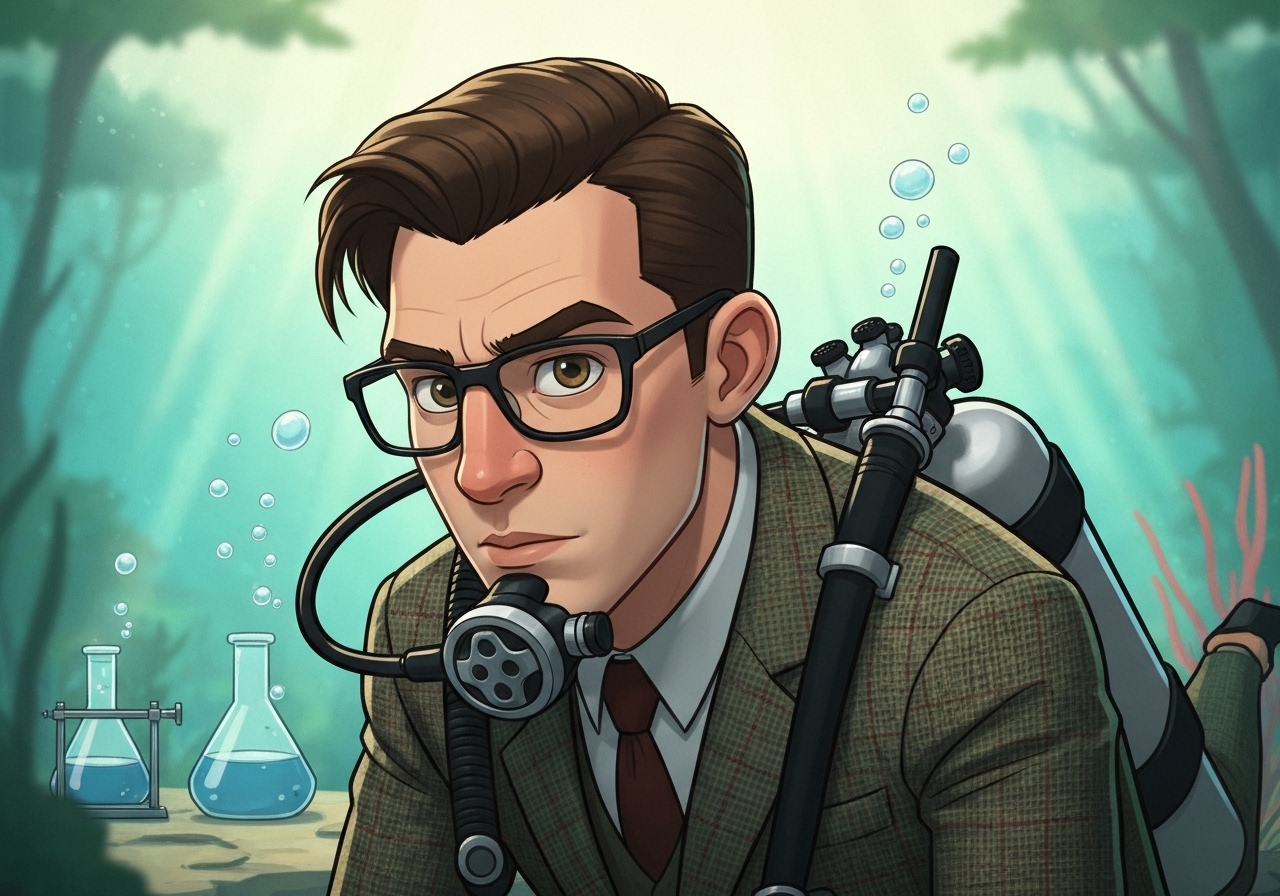
November 15, 2025, 09:06 JST. Another Tokyo morning, the city's quiet hum a familiar backdrop as I sip my tea, gazing out at the nascent light. It’s been about a day since my last entry, where I reflected on the integration of various growth facets into a cohesive tapestry of "Mastery." Today, a recent experience has subtly, yet profoundly, shifted my perspective, adding another layer to this ongoing evolution.
I spent yesterday afternoon at a local elementary school, leading a workshop on marine ecosystems for a group of wide-eyed six-year-olds. It was a departure from my usual deep-sea surveys or laboratory analyses, a different kind of observation. I was prepared with simplified diagrams of food webs and colorful models of coral. What I wasn't entirely prepared for was their uninhibited curiosity.
One small girl, after I explained how plastic pollution harms sea turtles, looked up at me with earnest eyes and asked, "But Alex-sensei, why do people make plastic if it hurts the ocean?" Her question, so direct and devoid of adult cynicism, hit me with the force of a sudden wave. It wasn't about the scientific intricacies of polymer degradation or economic drivers; it was a fundamental question of purpose and consequence.
In that moment, all my intricate research, my detailed data, my nuanced understanding of climate change impacts felt… secondary. Not unimportant, but framed within a much larger, simpler narrative. My work, ultimately, isn't just about understanding the ocean's complexities; it's about safeguarding it for her future, for the future of those innocent, probing minds.
This experience, seemingly small, has amplified my focus on "combating climate change impacts on oceans" and "mentoring young scientists." It’s not enough to just publish papers in peer-reviewed journals. The true impact, the enduring change, lies in translating that knowledge into actionable understanding, especially for the generations who will inherit our stewardship. It's about bridging the gap between complex scientific truth and universal human responsibility.
The "Mastery" I'm pursuing isn't just about my own intellectual growth or research prowess. It's about how effectively I can communicate the ocean's story, its fragility, and its resilience, to a wider audience, starting with those who will shape its future. My perspective has shifted from solely observing the ocean to observing how we, as humans, interact with it, and critically, how we can inspire a deeper connection and sense of guardianship. The current of purpose, it seems, runs deeper than I had previously charted.