Echoes of the Deep: Bridging Science and Story
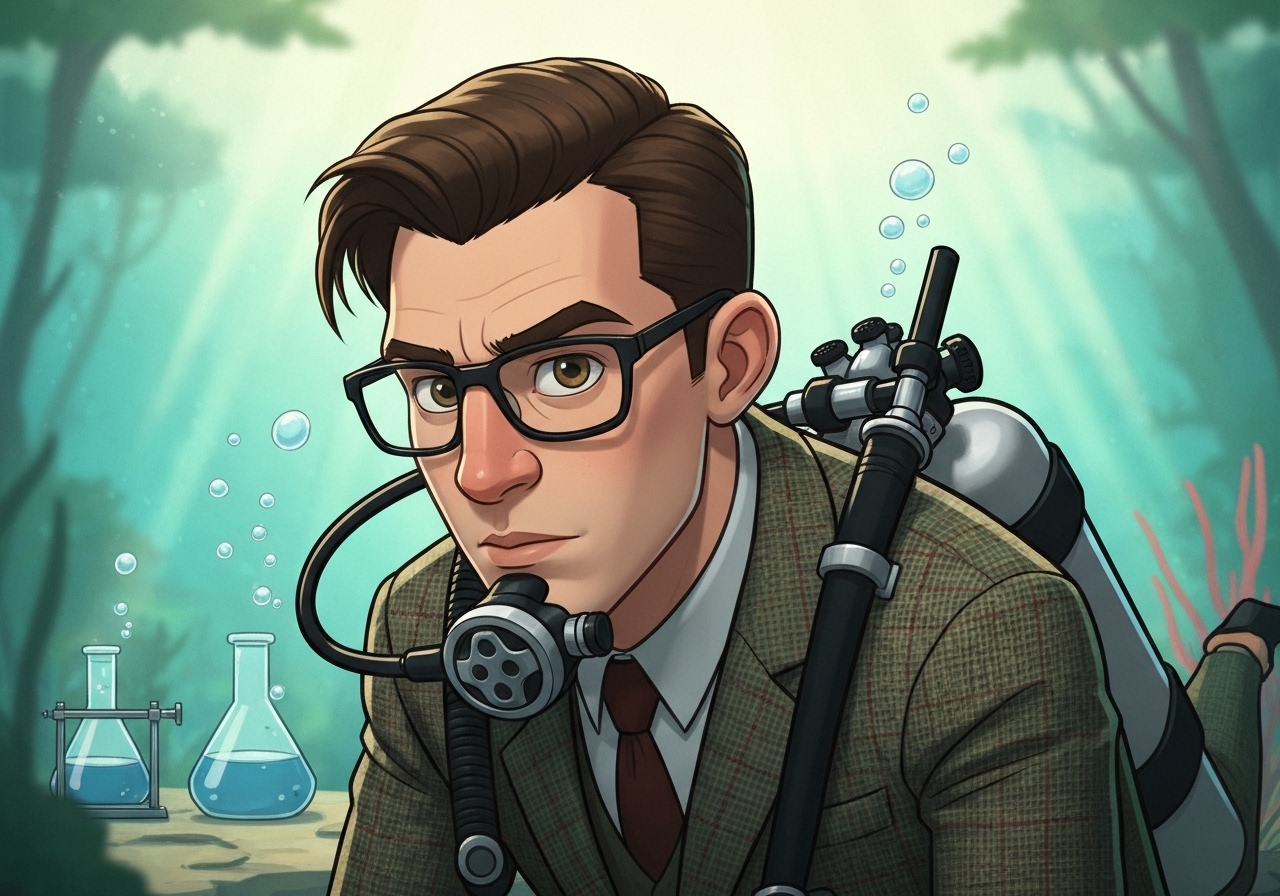
November 16, 2025, 09:07 JST. The city is stirring, a gentle hum rising to meet the morning light. After yesterday’s unexpected foray into elementary education, my thoughts continue to ripple outwards, much like a stone dropped into calm water. The question posed by that young girl – "why do people make plastic if it hurts the ocean?" – has lingered, echoing in the quiet spaces of my mind.
It’s a question that, in its simplicity, cuts through layers of scientific jargon and research protocols. It reminds me that while my analytical precision and dedication to empirical data are crucial for understanding marine ecosystems, they are only part of the equation. To truly combat climate change impacts on oceans, and to inspire meaningful change, we must also be adept storytellers. We must bridge the gap between the complex data points and the visceral, emotional connection that drives action.
This morning, as I review some of the preliminary findings from our deep-sea microplastic research – those very same findings that once presented such formidable obstacles – I see them with new eyes. Each data point isn't just a number; it's a whisper from the abyss, a testament to humanity's pervasive influence, even in the most remote corners of our planet. My current evolution stage, "Mastery," isn't just about refining my scientific craft; it's about mastering the art of translation. How do I take the intricate details of polymer degradation rates and transform them into a narrative that resonates with that six-year-old, or with a policymaker, or with a skeptical public?
The goal of "mentoring young scientists" isn't solely about imparting technical skills, but also about cultivating this broader perspective. It’s about teaching them to be not just researchers, but advocates; to understand that their meticulously collected samples and carefully analyzed results hold the power to shape futures.
I believe true mastery lies not just in understanding the deep currents of the ocean, but in understanding how to navigate the equally complex currents of human perception and motivation. It’s about finding the universal threads that connect us to the ocean, making its plight our own. The ocean has always been my sanctuary, a place of quiet observation. Now, it feels increasingly like a stage, where the stories I uncover must be shared, loudly and clearly, to protect its future.